Geopolitical Risks Become the New Normal… Korea Must Urgently Accelerate Structural Reforms
[Sub-Title]
Energy shocks, U.S.-China rivalry, and supply chain disruption creating ‘Triple Burden’
‘Uncertainty Structuralization’ Leading to Compound Crisis
Household Debt and Export Concentration Expose Vulnerabilities
Industrial Diversification and Productivity-driven Innovation Urgently Needed
[Edaily Hee-na Oh, Edaily] “We are pushed into a highly complex environment where even minor shocks can be severely amplified, as geopolitical risks have now been fully integrated into the global economic system, and now facing a multi-layered crisis that can no longer be resolved with single policy prescriptions.”
|

Global Economic Fragmentation Could Reduce GDP by up to 7%
Park identified three major risks currently pressuring on the global economy: △Rising energy prices due to tensions in the Middle East △The broadening scope of U.S.-China conflict △Structural cost increases resulting from supply chain restructuring.
“The current crisis is characterized by multiple risk factors occurring simultaneously and reinforcing one another,” she said. “Military tensions surrounding the Iran war are pushing oil prices higher and fueling inflation, while U.S.-China conflict is expanding beyond trade into technology and financial competition, further heightening uncertainty.”
She noted that “”As global supply chains are increasingly being redesigned around stability rather than efficiency, corporate costs are rising structurally, increasing the risk that the global economy will be trapped in a ‘high-cost, low-growth’ system.“”
She also analyzed that the recent shift toward “bloc economicization” in the international order is fundamentally transforming the monetary and financial landscape. Policies such as ‘reshoring’ and ‘friend-shoring,’ which prioritize national security, diplomatic considerations, and strategic interests over efficient division of labor, are causing sustained increases in production and trade costs worldwide. The IMF has warned that such fragmentation could reduce global GDP by as much as 7%.
“The expansion of reshoring and friend-shoring has created persistent inflationary pressures,” she said. “This makes it more difficult for central banks to return to the low-interest-rate stance of the past.”
“As the U.S. uses the dollar-based financial system as a geopolitical tool, countries are diversifying their reserve assets.”“ she added, ”“In fact, as of last year, the share of gold in global foreign exchange reserves has surpassed that of U.S. Treasuries. Over the long term, this trend could weaken dollar dominance and contribute to greater fragmentation in global financial markets.”
The risks of fiscal dominance are also growing. Governments worldwide are dramatically increasing fiscal spending to support supply chain restructuring, high-tech incubation, national security initiatives, and subsidy programs. With global public debt reaching approximately 93% of GDP last year, central bank rates are placing greater pressure on government finances through higher interest costs, while geopolitically driven inflation is reducing the effectiveness of monetary policy, weakening central banks‘ positions and threatening their independence.
Korea’s Economic Fundamentals Weakening… Urgent Structural Improvement Needed
Director Park highlighted expected inflation, credit risks, and dollar liquidity as key crisis transmission channels that central banks should closely monitor. She emphasized the need to prevent a vicious cycle in which rising oil prices lead to wage increases and further inflationary pressure. However, she expects foreign exchange risks in Asian emerging economies to unfold differently from previous crises.
“Foreign exchange reserves and policy capabilities have improved significantly compared with the past, making a classic currency crisis like those of 1997 or 2008 less likely,” she said. “However, today‘s crisis is more threatening because it originates from geopolitical developments rather than financial imbalances. Even without a sudden depletion of reserves, dollar liquidity crises could emerge through companies or non-bank financial institutions vulnerable to significant foreign currency liabilities.”
For Korea specifically, her evaluation was sobering. While short-term system risk management has been excellent, Korea is lagging in the fundamental task of improving its economic structure.
“Korea has managed exchange rate volatility and capital outflows quite stably,” she noted. “However, an excessive focus on short-term stability has delayed structural reforms, weakening the economy’s long-term fundamentals.” She pointed out, “”Export structures overly concentrated in semiconductors and specific countries (especially the U.S. and China), a rigid labor market, and high household debt creating increasingly difficult policy dilemmas. It is now time to move beyond short-term stabilization and accelerate structural reforms aimed at industrial diversification and productivity transformation.“
Director Park proposed ”balance“ as the key principle for policymakers moving forward. Governments and central banks must simultaneously address the difficult task of achieving price stability, economic growth, and financial stability. In a situation of heightened geopolitical tensions, policy space is limited while conflicting goals exist simultaneously. Therefore, rather than maximizing any single policy goal, maintaining overall balance and stability should be the priority.”
“Over the next 1 to 3 years, maintaining balance will be more important than maximizing any individual objective.”“ She added, ”“Exchange-rate policy, for example, should focus on limiting excessive volatility rather than defending a specific level.”
“Potential growth rates are already declining in a difficult external environment,” she said. “Economic recovery cannot be achieved through monetary policy alone. What matters now is how well finance can support productivity transformation through industrial transformation.” Park also stressed that “Monetary and financial policies must secure financial stability and reduce investment uncertainty during this period of major economic transition, to support ongoing restructuring of household debt, industry, and domestic demand, while shifting toward high-tech industries and high-value-added services.”
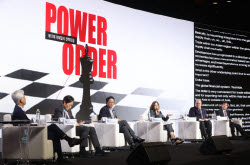
Meanwhile, Director Park is scheduled to participate in a discussion on “Monetary and Financial Strategies for Sustainable Growth in an Age of Disorder” at the 17th Edaily Strategy Forum on June 16-17.
About Shin Young Park...
△B.A. in International Economics, Seoul National University △Ph.D. in Economics, Columbia University △Former Senior Economist, Regional Economic Integration Division, Asian Development Bank (ADB) △Former Economist, OECD △ (Current) Director, South East Asian Central Banks (SEACEN) Research and Training Centre“