This article was released as Pharm Edaily Premium Content on September 17, 2026, at 8:10 AM.
[Yu Jin-hee, Edaily Reporter] With glucagon-like peptide-1 (GLP-1) obesity and diabetes therapies establishing themselves as a mega-trend in the global pharmaceutical and bio sectors, strong buying momentum is flocking to domestic companies holding relevant drug pipelines and manufacturing infrastructure.
On the 16th, South Korean market interest zeroed in on companies armed with tangible catalysts beyond fleeting thematic hype—spanning global regulatory manufacturing clearances, national R&D project selections, and medical e-commerce distribution traction—pushing them to the top of the daily gainers board.
|

Osong Facility Clears US and European Audits… Quratis Embarks on Obesity CDMO Push
According to financial data provider KG Zeroin MP DOCTOR, the bio stocks entering the top 20 gainers across the domestic market on the day were Quratis (348080), MFC (432980), and Bluemtec (439580).
Quratis closed at its 30.00% upper daily limit at 3,705 KRW. MFC also hit the ceiling, leaping 29.96% to 3,145 KRW. Medical e-commerce distributor Bluemtec rallied 14.54% to finish at 2,600 KRW.
Market experts note that growing manufacturing bottlenecks and intensifying demand for convenient drug administration routes are directing structural tailwinds toward contract development and manufacturing organizations (CDMO), oral formulation specialists, and specialized distribution networks.
Analysts caution, however, that because these rallying names trade in the 2,000 to 3,000 KRW low-price bracket, investors must remain vigilant against heightened volatility driven by short-term speculative capital inflows. Market participants are advised to scrutinize fundamental metrics, including underlying balance sheet health and actual cash-generation capabilities.
Quratis surged to the daily limit shortly after the opening bell, propelled by US health authority manufacturing audit certifications and expectations surrounding global obesity and metabolic disease drug manufacturing contracts.
The company received an on-site audit certificate for its Osong Bio Plant from the Division of AIDS within the National Institute of Allergy and Infectious Diseases (NIAID), under the US National Institutes of Health (NIH).
The audit covered sterile injectable manufacturing and quality standards, including Quratis's tuberculosis vaccine candidate QTP101. The company is actively negotiating supply agreements to provide clinical-stage vaccines and adjuvants for trials across the United States and Europe.
Quratis's Osong production hub has methodically secured endorsements from premier global regulators. Following Current Good Manufacturing Practice (cGMP) clinical supply approval from the US Food and Drug Administration (FDA) in July last year, the facility cleared an on-site audit by an EU Good Manufacturing Practice (EU-GMP) Qualified Person (QP).
Building on these credentials, Quratis partnered with long-acting injectable platform company Inventage Lab to initiate bio-manufacturing. The two companies finalized supply pricing for clinical drug candidates across major pipelines—spanning obesity, diabetes, and dementia treatments—and initiated clinical batch manufacturing. European pharmaceutical players and domestic bio firms have also conducted on-site facility inspections, with follow-up contract manufacturing discussions underway.
A prior clinical supply contract with a US biotech firm to provide adjuvant for an HIV vaccine program further reinforces Quratis's operational standing. The company established manufacturing track records by supplying finished batches to clinical programs backed by US health agencies.
Market watchers view Quratis's strategy of capitalizing on global injectable supply shortfalls rather than relying solely on high-risk internal discovery as a calculated move. Anticipation is building that climbing factory utilization rates under validated Western regulatory benchmarks could lift the company out of chronic operating losses toward a mid-to-long-term turnaround.
"Clearing rigorous audits from premier global agencies validates our manufacturing credibility on the international stage," a Quratis official stated. "We intend to expand contract manufacturing orders across high-value obesity and metabolic disease treatments to establish a firm foundation for operational earnings."
|
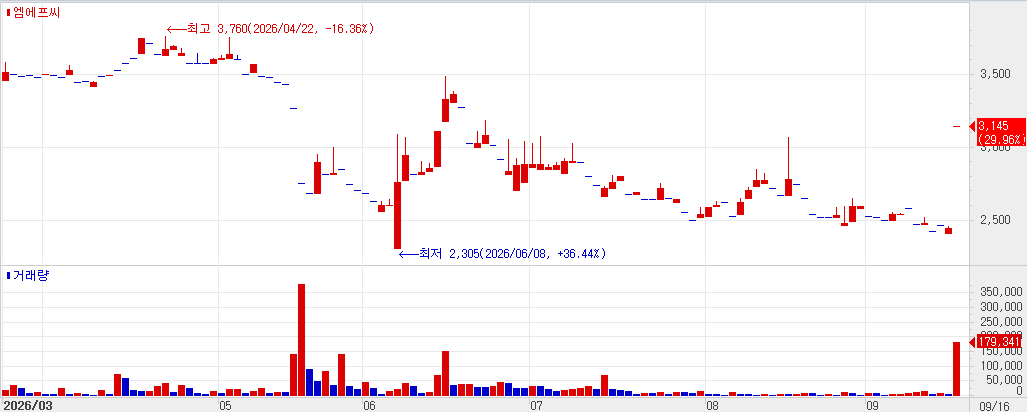
Leading 7.1 Billion KRW Oral Insulin Project… MFC Deploys AI Formulation Engine
High-value active pharmaceutical ingredient (API) specialist MFC locked in its daily limit following its selection as the lead research organization for a government-sponsored initiative to engineer next-generation oral insulin.
The Ministry of Trade, Industry and Energy selected MFC to spearhead the personalized diagnostic and therapeutic products division under the Bio Industry Technology Development Project, the company announced on the 16th.
The initiative commands a total budget of approximately 7.1 billion KRW, including 4.8 billion KRW in state grants. Over the next 54 months through December 2030, MFC will steer the development of an oral insulin finished drug utilizing artificial intelligence (AI) and continuous manufacturing processes.
While daily subcutaneous insulin injections suffer from poor patient compliance, developing an ingestible pill has long presented a scientific bottleneck because therapeutic proteins break down rapidly via digestive enzymes in the gastrointestinal tract and exhibit low absorption across intestinal barriers.
MFC is joining forces with Kookmin University to apply specialized peptide stabilization and permeation-enhancing technologies designed to prevent gastrointestinal degradation. Dongguk University Industry-Academic Cooperation Foundation is overseeing non-clinical pharmacokinetic and bioavailability evaluations.
By leveraging data-driven predictive AI models, the consortium aims to compress candidate screening and manufacturing timeline milestones by up to 50%. MFC targets completing non-clinical efficacy and safety evaluations by 2030, paving the way for Phase 1 clinical entry and global out-licensing packages.
MFC holds a proprietary footprint as the first in the world to crystallize TBFA, an essential intermediate liquid material for cholesterol-lowering statin drugs, into solid form. Moving beyond conventional generic ingredients, the company launched Ilaprazole API—a proton pump inhibitor (PPI) for gastroesophageal reflux disease—and plans to roll out high-margin generic and reformulated API lines, including the non-steroidal anti-inflammatory ingredient Pelubiprofen.
Global commercialization is likewise advancing. MFC is conducting process validation batches to supply cholesterol drug APIs to a prominent Japanese partner, alongside ongoing CMO discussions with domestic and multinational drugmakers.
"We will complete platform technologies that transform injectable diabetes treatments into daily oral tablets," an MFC official commented. "Leveraging our high-precision AI formulation capabilities, we will accelerate our evolution into an advanced digital pharmaceutical platform company."
|
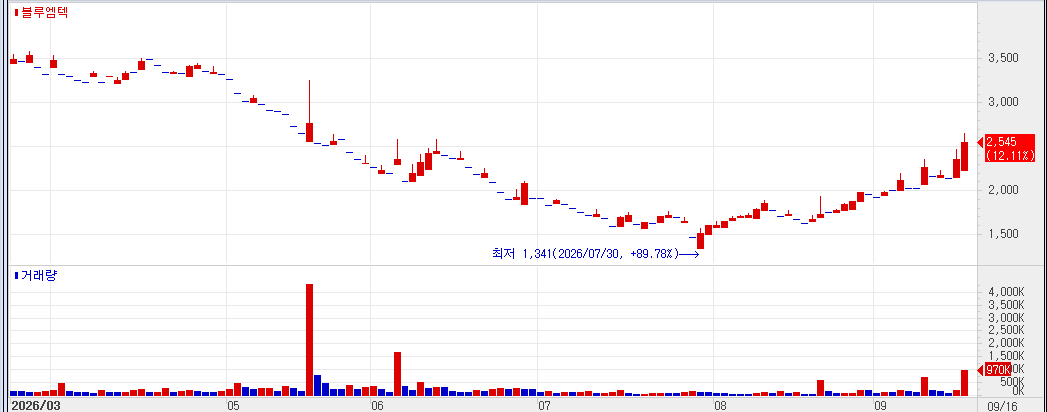
Harnessing Wegovy Distribution Volumes… Bluemtec Accelerates Toward Profitability
Bluemtec, the leading domestic pharmaceutical e-commerce platform, staged a double-digit rally on surging hospital distribution volumes of GLP-1 weight-loss medications coupled with an expanding, high-margin medical aesthetics lineup. Operating its specialized medical portal BluePharmKorea, Bluemtec serves as a primary supply conduit across local South Korean clinics.
The company's commercial trajectory steepened as multinational blockbusters such as Novo Nordisk's Wegovy entered domestic clinic distribution networks. Pharmaceutical distribution industry estimates indicate Bluemtec generated roughly 50 billion KRW in obesity drug sales alone last year.
Driven by these supply volumes, Bluemtec's total annual revenue jumped 39% year-on-year to 185.7 billion KRW last year. Concurrently, operating losses narrowed by 71%, shrinking from 6.9 billion KRW to 2.0 billion KRW over the same period.
Bluemtec is converting its network of more than 30,000 registered clinic accounts—initially engaged through high-demand therapeutics—into recurring buyers of profitable aesthetic products. Partnering with aesthetic makers Medytox and Humedix, the platform onboarded botulinum toxin and hyaluronic acid (HA) dermal filler portfolios.
The platform is scaling clinic order sizes by distributing Medytox's flagship Neuramis dermal filler line and submental fat-reducing injectables. Industry forecasts indicate the global medical aesthetics market will surpass 200 trillion KRW by 2030.
Beyond physical drug logistics, Bluemtec is diversifying into management service organization (MSO) offerings. The company recently partnered with marketing specialists to launch targeted apartment elevator media advertising packages for neighborhood clinics, unlocking high-margin software and advertising revenue.
With monthly operations crossing the break-even point (BEP) on overhead rationalization and richer product mixes, analysts view an annual transition into the black as increasingly viable.
"Building on the platform leverage demonstrated through obesity drug distribution, we are strengthening supplies of aesthetic solutions like fillers and neurotoxins," a Bluemtec official stated. "Our focus this year is executing both top-line growth and structural efficiency to deliver record revenue and our maiden annual operating profit."
Rallying Micro-Cap Bio Stocks… “Evaluate Cash Runway and Operational Stamina”
While market watchers view alignment with global obesity and metabolic demand favorably, they caution against unmeasured momentum chasing.
The sector frequently displays sharp swings whenever headline catalysts surface. Small-cap issues trading in the 2,000 to 3,000 KRW corridor remain vulnerable to extreme pricing volatility should institutional or foreign participants move to lock in gains across thin liquidity.
"Commercializing obesity and diabetes initiatives into tangible operating profits requires clearing multiple validation hurdles, including production yield stability, regulatory clearances, and sustained prescription adherence," noted BioBook CEO Hong Soon-jae. "Beyond scientific platforms, investors must carefully evaluate financial resilience—including cash reserves, debt obligations, and underlying core operating profitability—before deploying capital."